
Moon cycle:
- New Moon: 20th December 2025
- Full Moon: 3rd January 2026
- New Moon: 18th January 2026
Winter Solstice
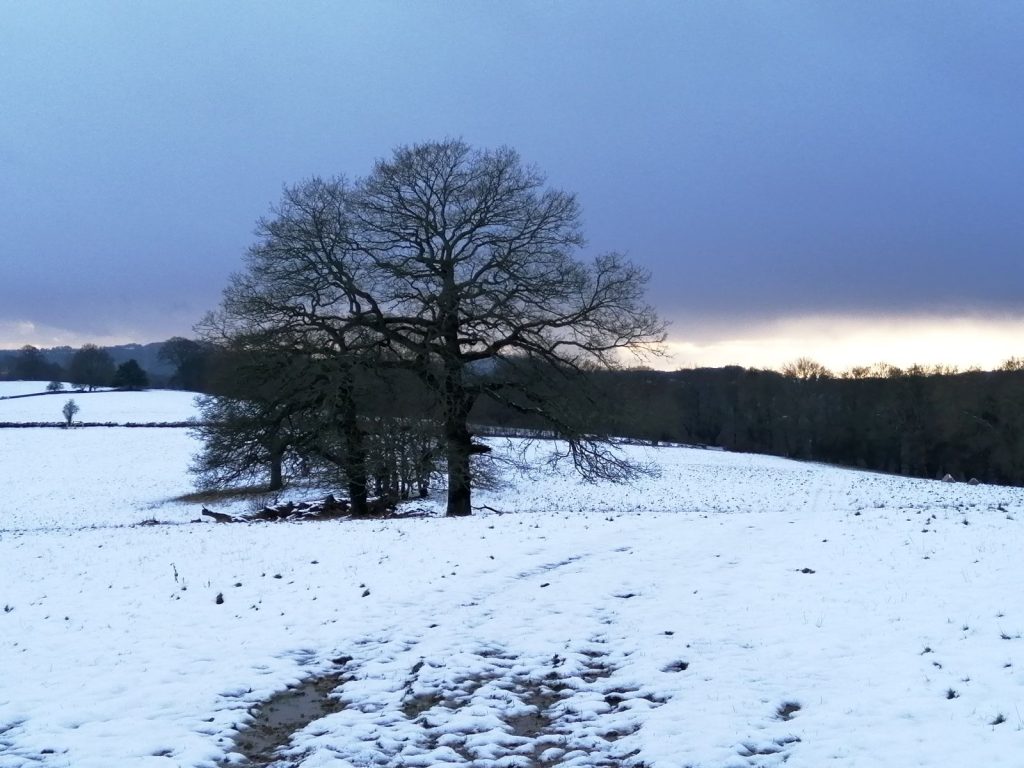
It’s December and the days are getting shorter, little by little, as we head towards the winter solstice on the 21st. As a farmer and a primary school gardening teacher, everything I am doing seems to be overseen by this quietening and darkening, with lessons and farm work governed by light and dark.
Quiet Moon
This is my favourite time of year, as after the sprints of spring plantings and the flow of harvest, there is finally time for the ‘Quiet Moon’. A period where I farm into the dusk and have to give in to the darkness. Work does not stop but there is a shift and a pause, with limits on what can be done outside in the short days. In some ways, winter with its storms, frosts and wildness doesn’t feel quiet at all. Like Vivaldi’s ‘Winter’ from The Four Seasons, it can feel turbulent. But as someone who works with nature, there is a peace in this perhaps because you cannot control this wild season. I tuck up the plants; close the polytunnel doors, do what I can and then let go and have time for contemplation.
Wheel of the Year
A few seasons ago, after having farmed for two decades, someone showed me their planting timings mapped out in a circle of the year and I suddenly clearly saw what I’d been working to without having realised it. It is helpful to draw a circle of the year with the months marked on it. Then mark on the solstices and equinoxes with lines joining them across the circle. This clearly helps you connect the light and dark to the months and when you grow plants on a latitude where there are seasons, you are conducted by the light or lack of it. Thinking about the year in this way was an epiphany and has helped me and the children I teach connect to the seasons of the year and the jobs that we do. We try and keep an awareness of the way that the seasonal variances affect the plants and us, especially the light and the dark.
Hibernation
In our winter lessons we have been discussing the mornings and how it is hard to get out of bed in the cosy dark; how some animals will sleep in hibernation through the whole of winter; how plants, the capturers of sunlight, slow their growth as daylight diminishes; how the berries are bright stores of sunshine offering food in winter; and how the winter solstice is the very darkest time but also the beginning of returning light.
Hope of Spring
This week every child made a bouquet of plants from the foliage that we then put together on a wreath ring, one for each class. Historically, wreaths were made to celebrate the seasons with the circle representing the cycle of the year and winter wreaths made to celebrate the hope of spring to come. The children know that the next time I see them, in January, though it will still be winter, we may notice the sap rising again as we will have gone past the magic day when light begins to grow again.
The Solstice or Wheel of the Year Game
Draw a chalk circle on the ground. Draw lines across the circle marking the solstices and equinoxes teaching the children the dates and about day and night length. Mark the half way points between each of these points and write the dates and pagan names (Imbolc, Beltane, lammas, Samhain) discussing the traditions of each time and what would be happening in that season (harvest, bird migration, etc.).
Then correspond the solstices and equinoxes to features in the playground that are in the same direction on the circle – for example a wall out from the direction of the point where the winter solstice is. Tell the children you are going to call out a place on the circle in different ways and they need to run to the correct direction feature.
Call out various instructions and see if children can run in the correct direction out from the circle.
Instructions might include, for example: ‘Winter solstice’, ‘21st June’, ‘When birds build their nests’, ‘When the days are the shortest’, ‘When day and night are equal length’, ‘When you were born’, ‘When trees are sleeping’, ‘When you can’t sleep because the evenings are so light’.
This game helps children make associations between different parts of the natural world. It helps them connect what they observe around them, from the light, to what the plants are doing, to how they feel through the changing seasons.
Quiet Activities
Practise sitting outside and keeping very still. Wrap up warm and see what you can notice when you try and blend into the landscape.
Set up a time lapse using a phone on a tripod and watch back to see what movement you can detect in your school garden.
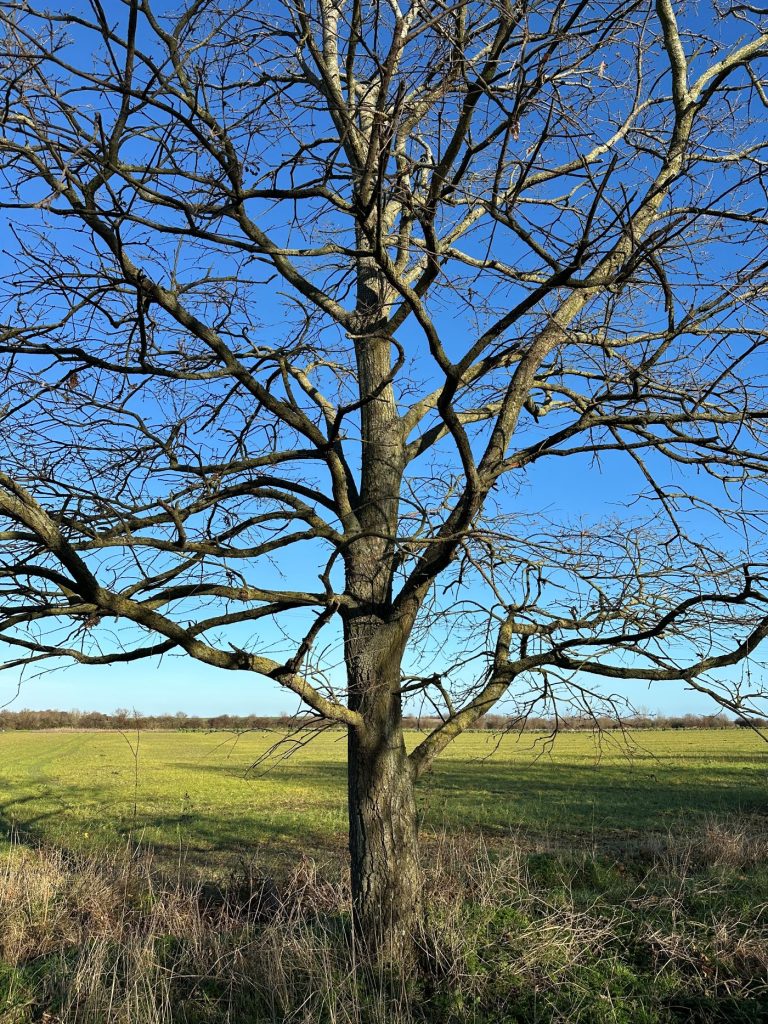
This time of year, deciduous trees are bare of leaves and their framework of boughs and trunk can be seen more clearly. Photograph or sketch the shape of the trees and look for these patterns elsewhere in nature.
Did you know: Fractal patterns have been shown to reduce stress. Children already have an adult-like preference for visual fractal patterns commonly seen in nature, by the age of three. https://www.nature.com/articles/s41599-020-00648-y
Gather winter foliage and wrap around a base adding dried oranges and lemons and other natural items.
As the year comes to an end, reflect on the seasons and your activities in and with the nature around you. Write down some of your highlights, adding any sketches or photographs to your journal.
Alice Holden is Head grower at Growing Communities Dagenham farm and a gardening and nature teacher at Godwin Junior school in Newham, London. She is author of ‘Do Grow’ – a book about how to grow vegetables organically.